As an Amazon Associate I earn from qualifying purchases.
Spring table decor feels like a small celebration, and these Easter Table Centerpiece DIY Decor Ideas bring that fresh energy without needing a florist. I picked projects that work for a sunlit brunch table, a casual family dinner, or an al fresco picnic, using common materials like eggs, moss, linen, and pastel paint.
Each idea mixes textures—ceramic, wood, glass, and soft blooms—so the centerpiece reads layered and inviting.
Try a few of these Easter Table Centerpiece DIY Decor Ideas to match your tableware and the mood you want for the day.
Painted egg runner with wildflower sprigs
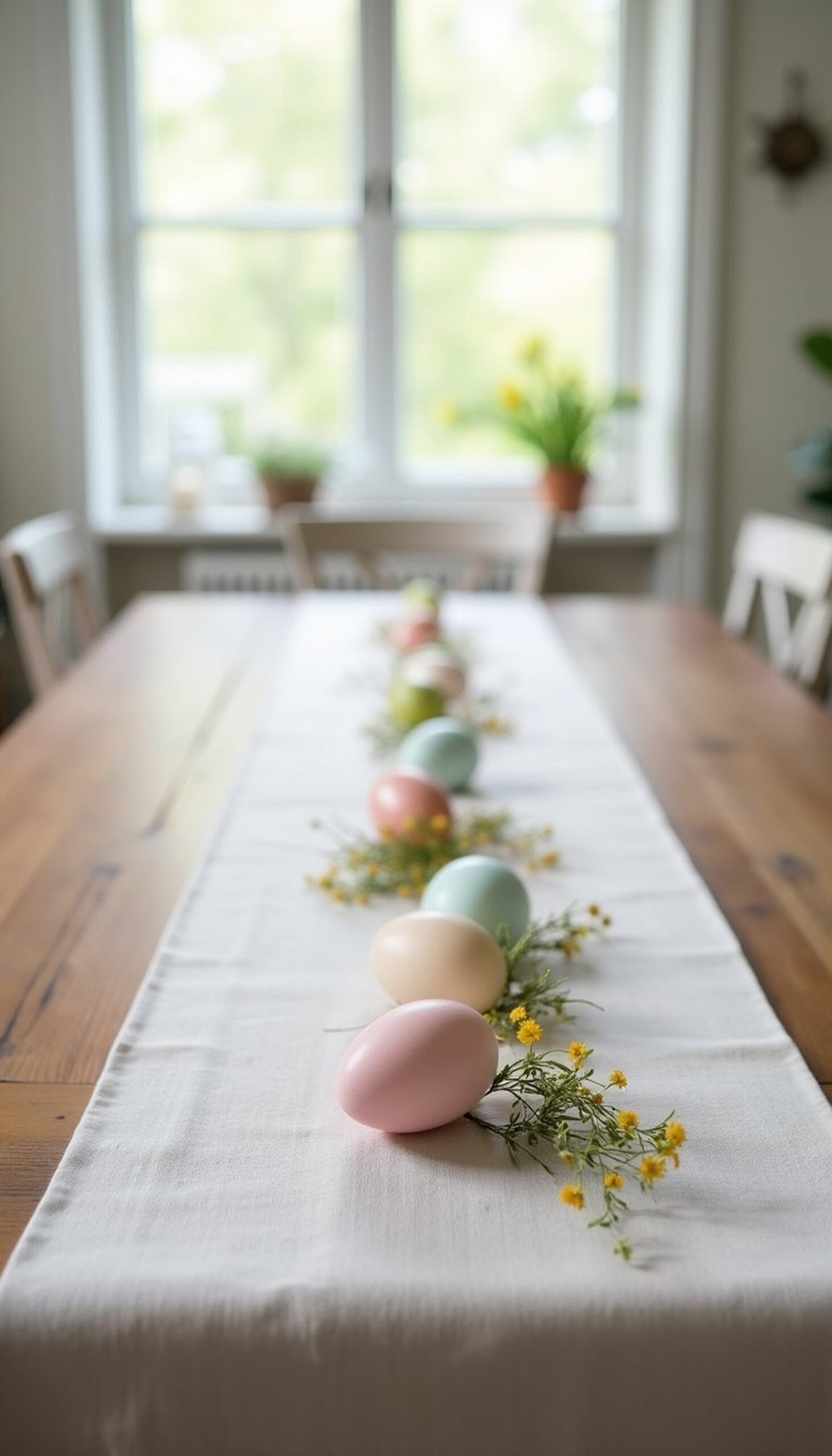
Line a linen runner with hand-painted wooden or real eggs in a gentle pastel palette—blush, mint, butter yellow—and tuck tiny wildflower sprigs between them. The mix of matte eggs, soft linen, and feathery blooms creates a casual, collected look that brings spring to the middle of the table. I like the contrast between rounded eggs and the linear runner; natural twine or thin ribbon anchoring each sprig adds a rustic touch. This layout works well on long farmhouse tables and narrow console tops.
Styling Tips
- Vary egg sizes for visual movement.
- Add small clusters of greenery every few eggs.
- Keep colors muted so flowers pop.
Tiny terrarium eggs for a fresh table
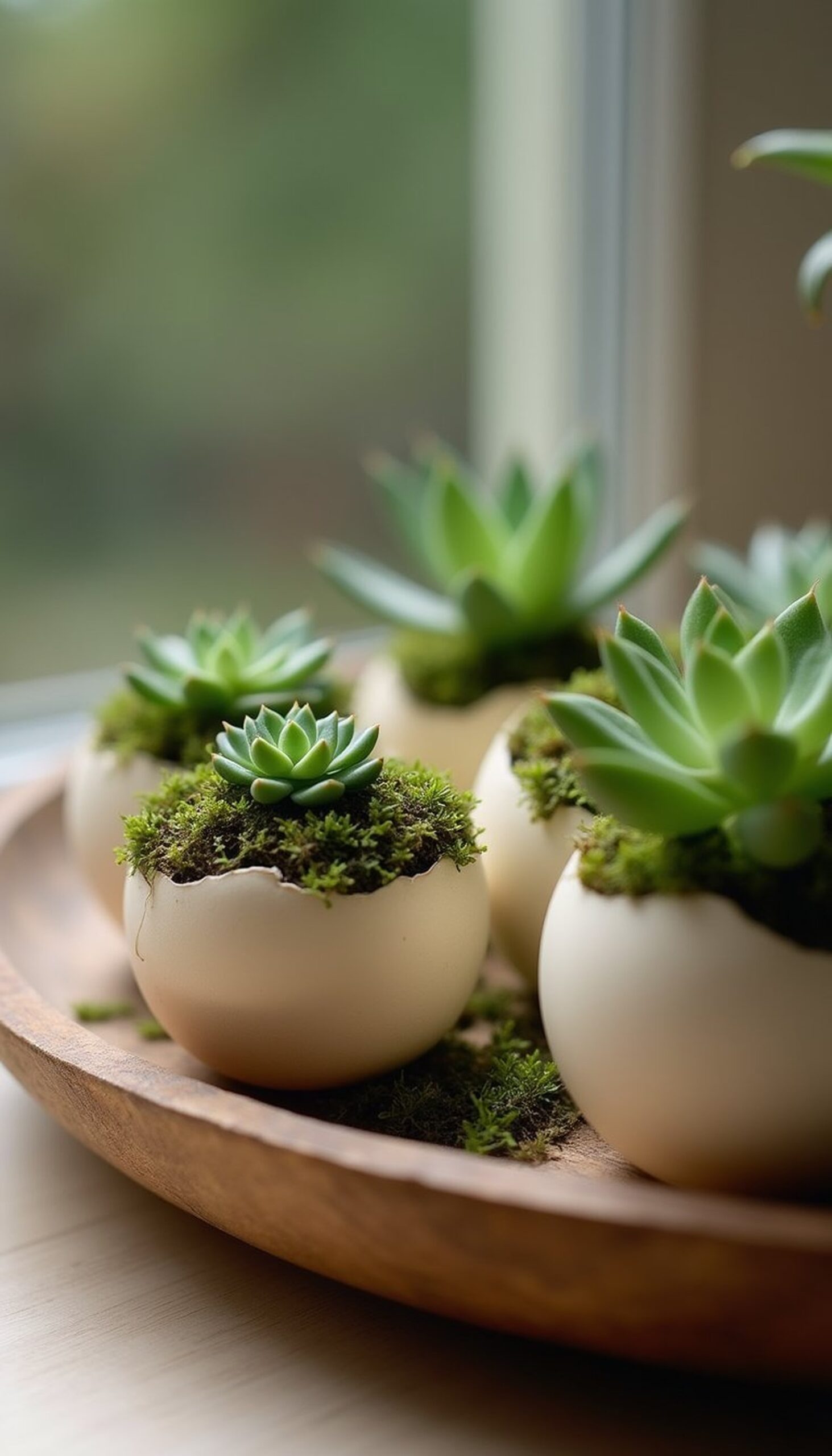
Crack the tops off hollowed eggshells and turn them into miniature terrariums filled with moss, tiny air plants, or small succulents. The delicate shells paired with vibrant green textures make each place feel personal and light. Use a mix of white and pale-blue shells set on a natural wood tray or a mirror platter to reflect daylight. The tactile contrast between smooth shell and soft moss reads very springlike. I often set a handwritten name card beside each shell for an extra homey detail.
Styling Tips
- Use eggshells with small pebbles for drainage.
- Place shells on mini saucers to catch moisture.
- Group odd numbers for a natural feel.
Tea cup bouquets: vintage floral centerpieces
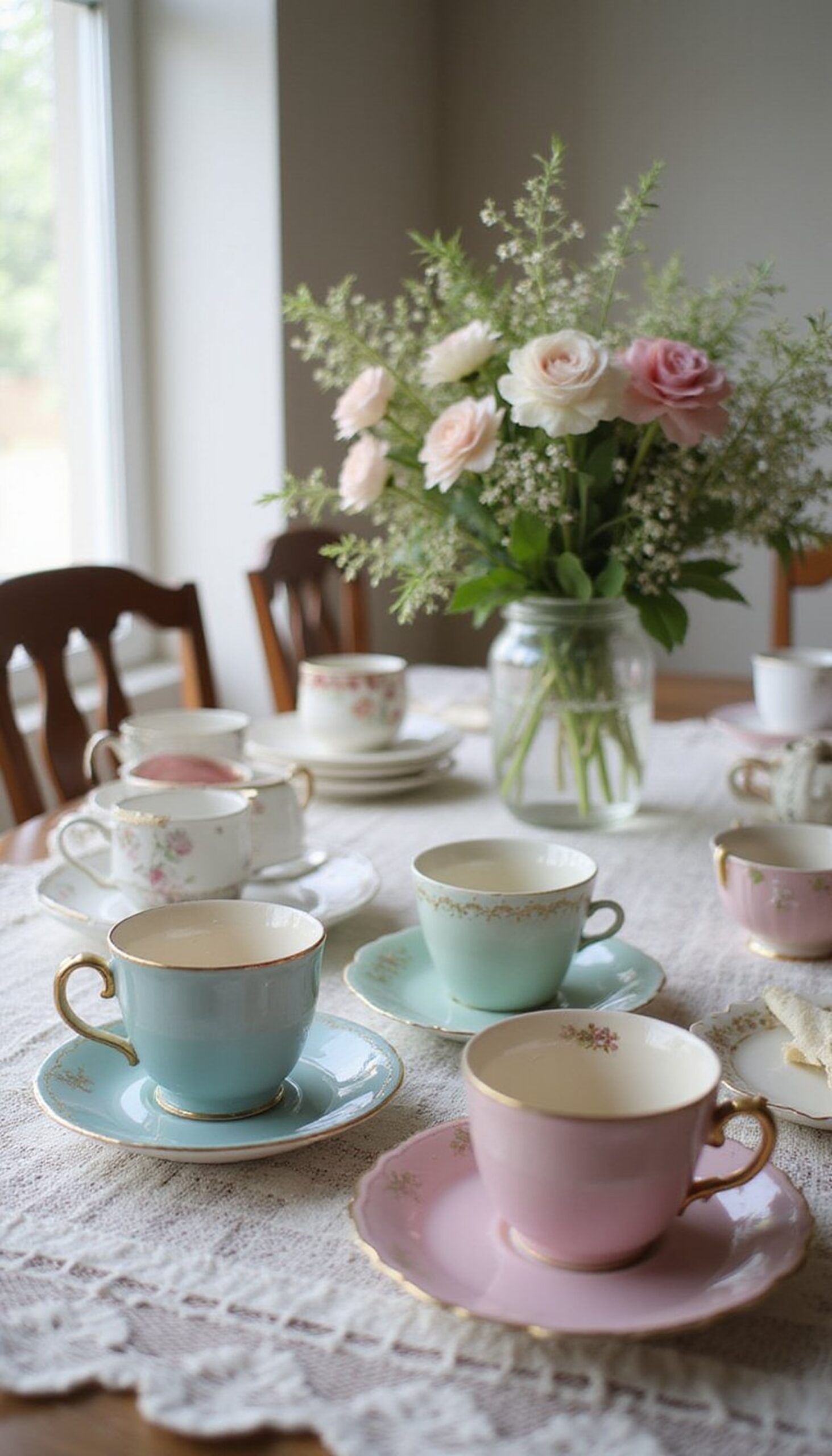
Collect mismatched vintage teacups and fill each with a tiny bouquet of ranunculus, baby’s breath, and sprigs of mint. The porcelain textures, gold rims, and small floral clusters make a table feel intimate and story-filled. Place three to five cups on a lace doily or a small wooden board for a centerpiece that reads like an afternoon memory. Palette ideas include blush and cream with hints of sage. I like using thrifted cups for variety—each one brings a different mood to the arrangement.
Styling Tips
- Mix patterns but keep a cohesive color family.
- Use floral foam for stability in shallow cups.
- Add a single taller bloom to one cup for height contrast.
Get instant access to 50+ high-resolution decor guides and printable layout planners for every room.
Just $19.99 — lifetime access
Moss, branches, and pastel eggs centerpiece
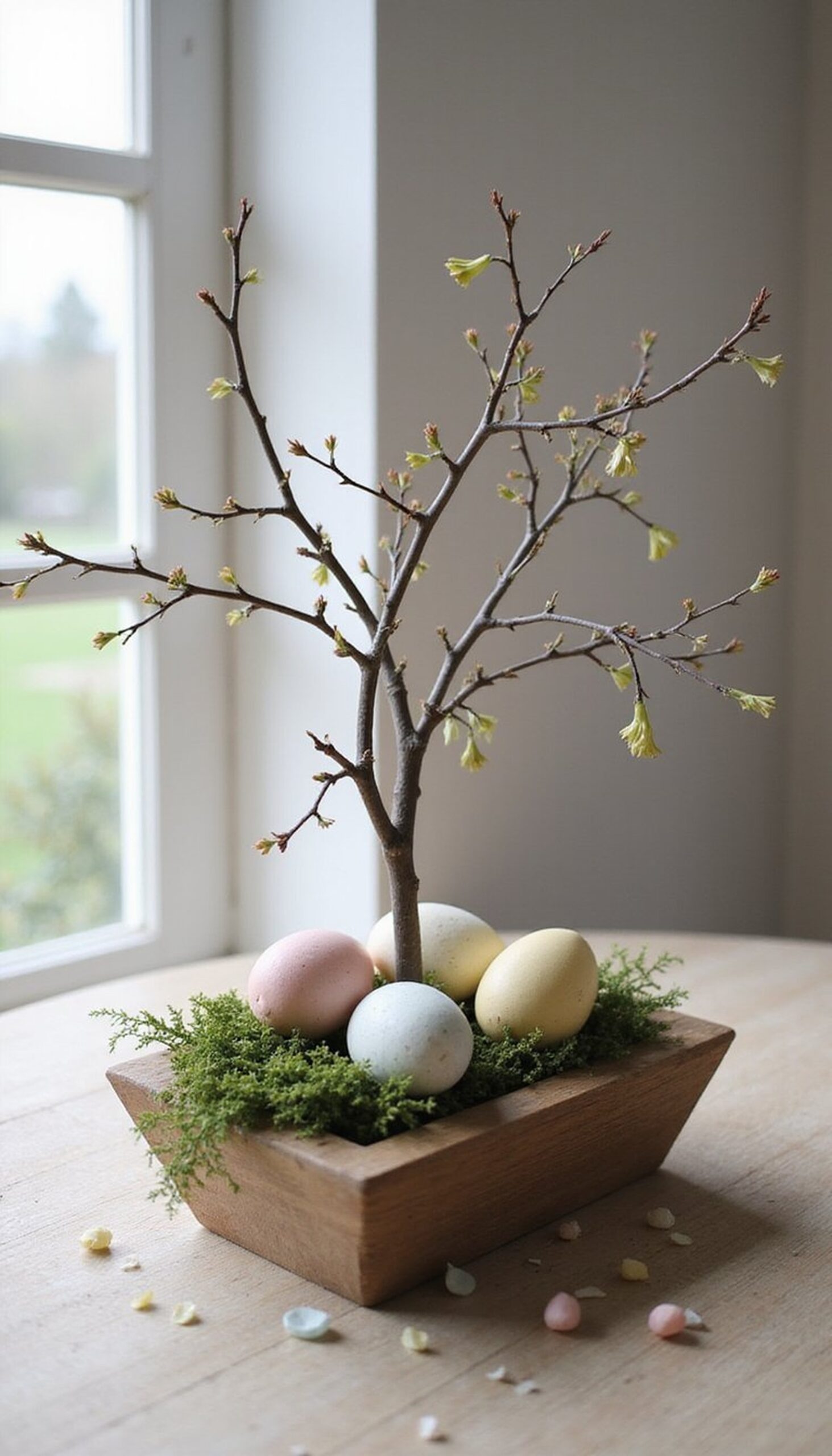
Create a low, natural centerpiece using a bed of sheet moss topped with thin foraged branches and a scattering of pastel-dyed eggs. Textures play nicely here: velvety moss, rough bark, and smooth eggs create contrast that reads like a little spring garden. Use a shallow wooden trough or a long ceramic dish to keep everything contained. Colorwise, stick to soft greens, ivory, and pale pinks so the eggs feel integrated. I often add a few tiny buds to branches to hint at new growth.
Styling Tips
- Secure branches with floral adhesive in the base.
- Keep the arrangement low to maintain sightlines.
- Add a few small candles for evening warmth.
Rustic wooden crate with nests and candles
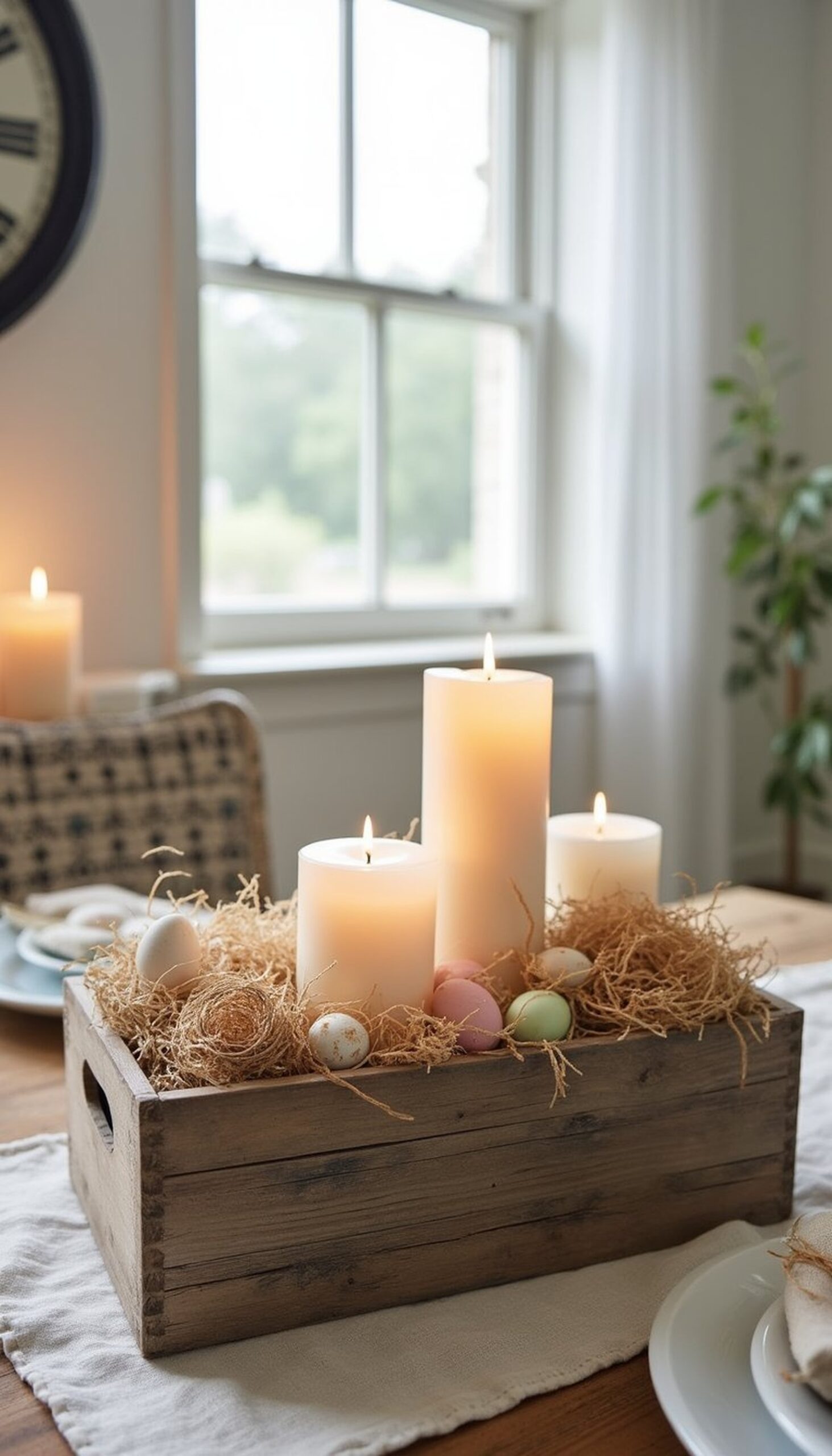
Use a small reclaimed crate as the base and layer it with straw nests, faux or real eggs, and a mix of pillar and votive candles. The wood grain and straw add rough, tactile interest against smooth ceramic or glass candle holders. Choose a palette of warm neutrals—oat, cream, and soft brown—with hints of pale blue or peach in the eggs. This centerpiece feels cozy and approachable on a kitchen table. I like lighting the candles just before guests arrive so the table has a gentle glow.
Styling Tips
- Place candles on heatproof dishes inside the crate.
- Cluster nests at staggered heights for depth.
- Tuck a sprig of greenery into each nest.
How to style a glass cloche vignette?
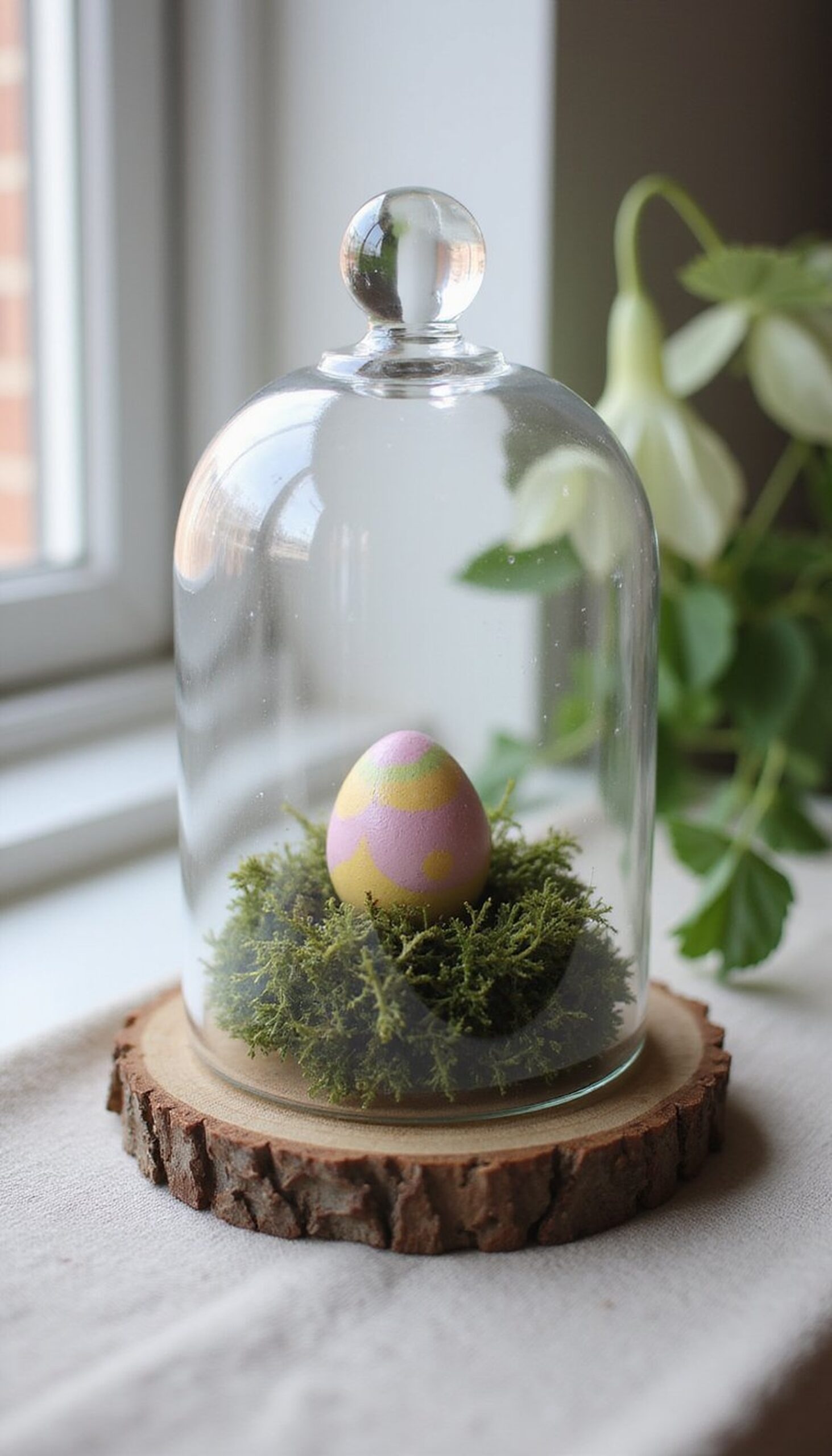
Glass cloches make a tiny scene feel curated. Try layering a small patch of moss, a miniature nest, and one hand-painted egg under a cloche on a stack of porcelain saucers or a wooden slice. The clear glass creates a focused moment that draws the eye, while the base material (wood, marble, or ceramic) sets the tone. Keep the palette soft—sage, eggshell, and pale lilac—to maintain a springlike vibe. I enjoy arranging several different-sized cloches along a runner for a collected look.
Styling Tips
- Mix cloche heights to keep interest along the runner.
- Use a mirrored base for added light reflection.
- Place a tiny LED light under one cloche for evening.
Citrus bud vases for bright spring tables
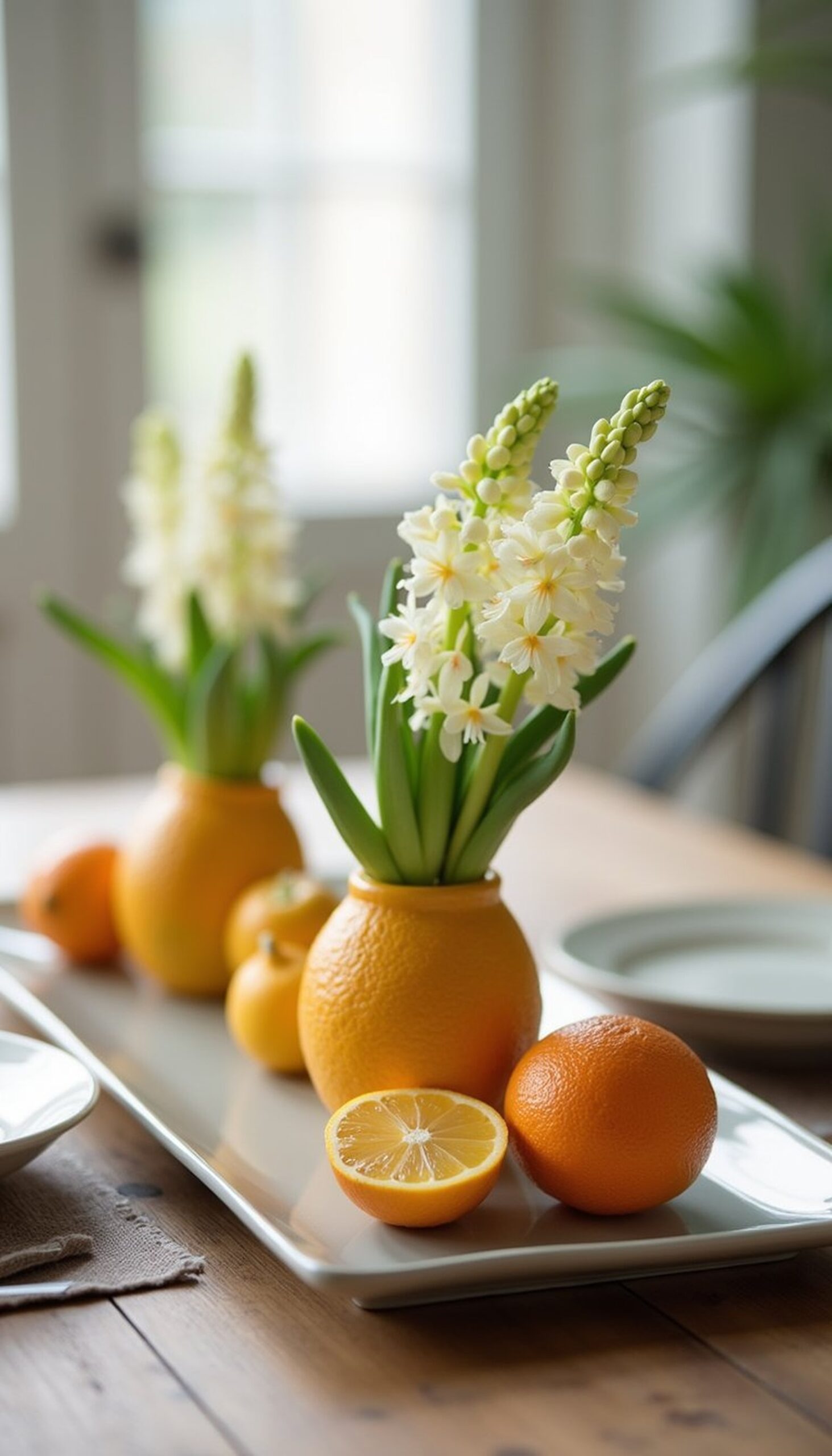
Slice small citrus fruits in half and hollow them slightly to use as mini bud vases—place a single hyacinth sprig or small bunch of baby’s breath in each. Arrange the citrus halves on a long tray interspersed with small ceramic dishes of whole lemons and limes for extra color. The shiny citrus skin and glossy water inside the halves add a fresh, sunlit feel to the table. Color choices are cheerful: lemon yellow, lime green, and soft white blooms. I like this for brunch or patio gatherings where scent lifts the space.
Styling Tips
- Place a clear tube inside citrus halves to protect fruit from water.
- Alternate citrus colors for a striped effect.
- Pair with linen napkins in neutral tones.
Bunny-ear napkin rings with fresh posies
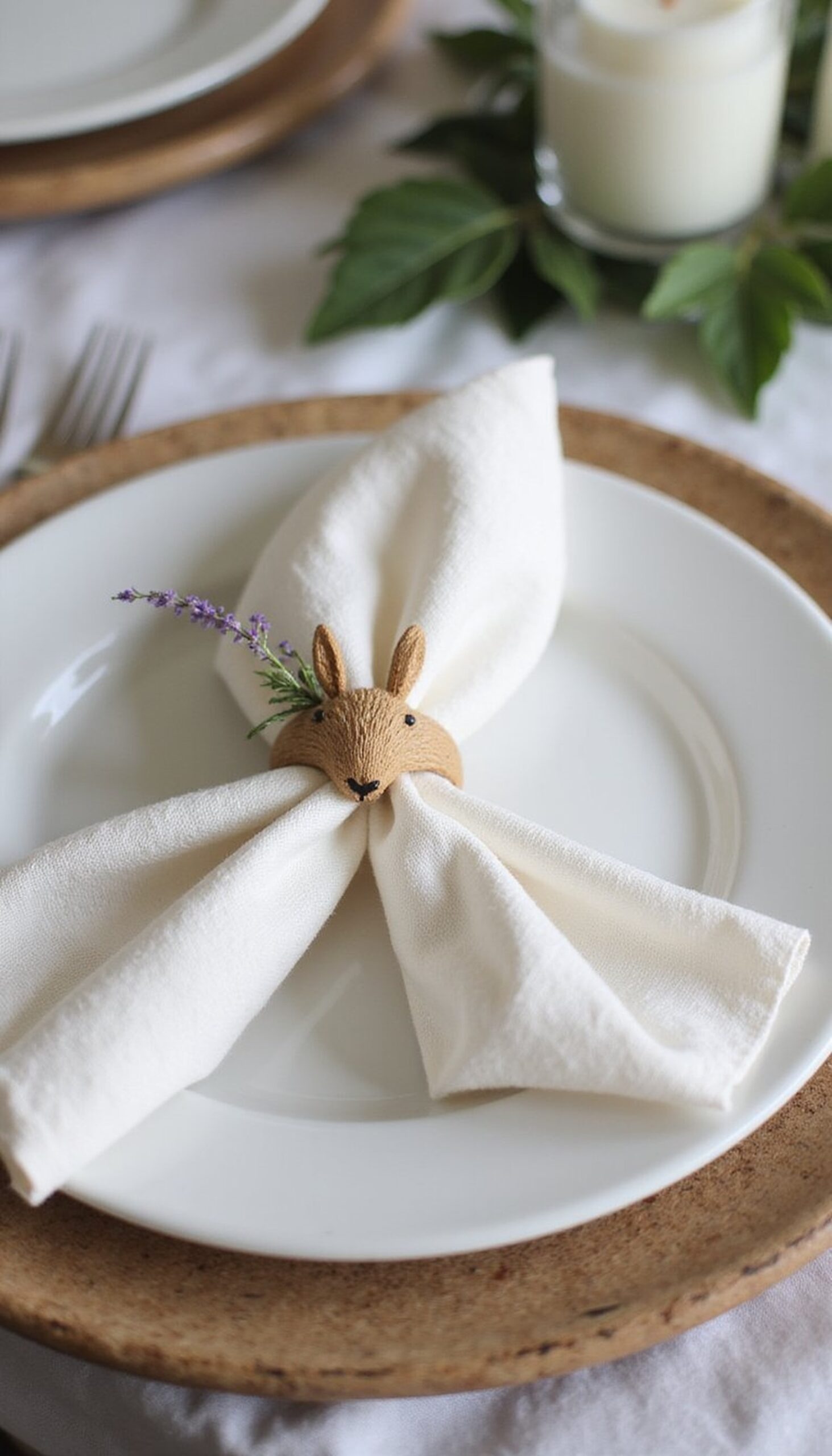
Create napkin rings by cutting bunny-ear shapes from felt or thin wood, then attach a small loop to slide over a rolled linen napkin. Add a tiny posy—thyme sprig, lavender, or a small rosebud—tucked behind the ear for a sweet, tactile detail. The contrast between soft felt or warm wood and fresh flowers makes place settings feel handcrafted. I fold napkins casually to keep the vibe relaxed and add a small name tag for a personal note. Colors work well in soft gray, cream, and one accent pastel.
Styling Tips
- Use lightweight flowers to avoid drooping.
- Match ear colors to your runner or placemats.
- Pin the posy in place with a dab of floral glue.
Eggshell succulent planters on wooden tray
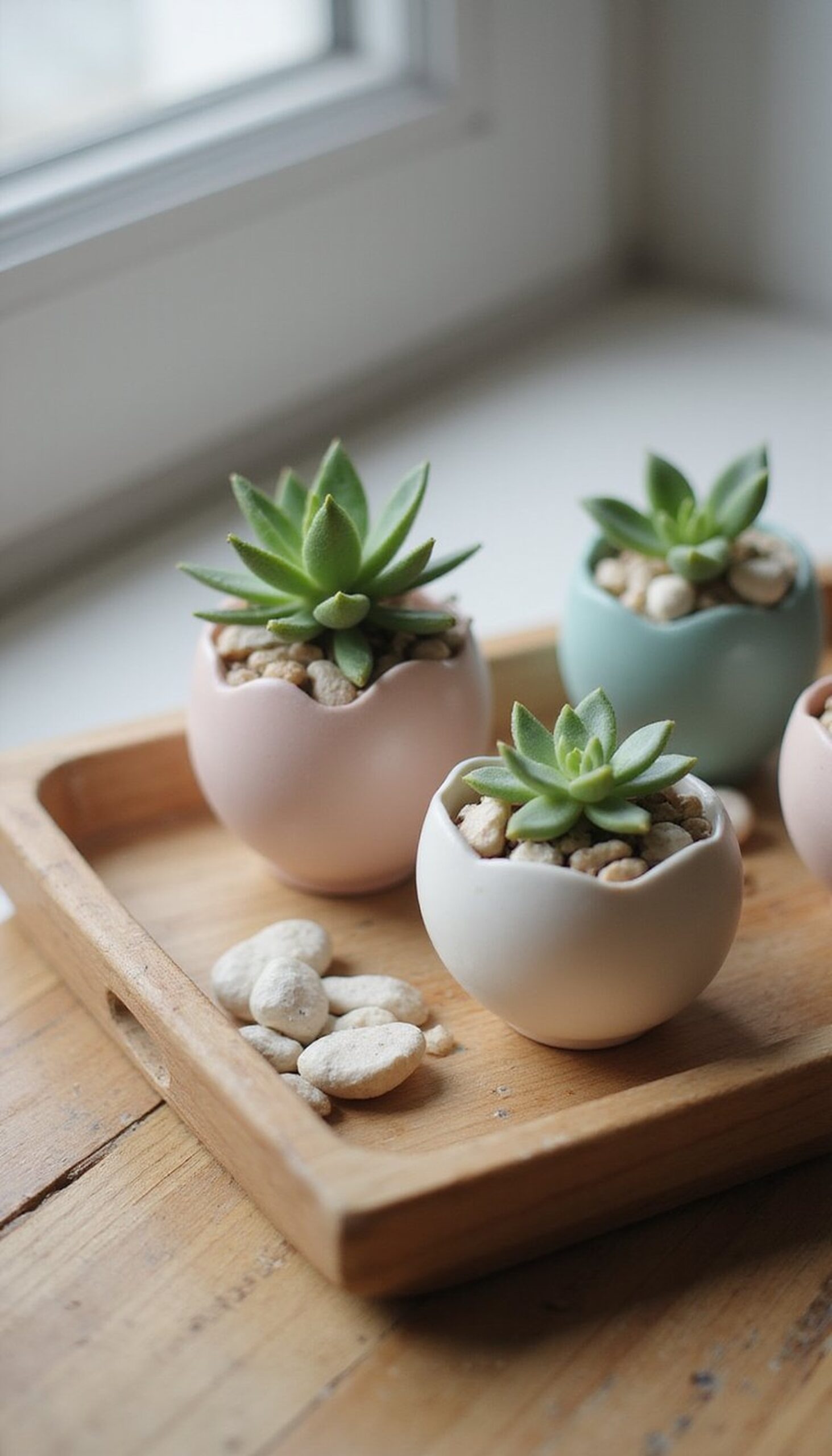
After carefully emptying eggs, paint the outsides in neutral or pale hues and fill with a touch of soil and a tiny succulent or sedum. Cluster several on a reclaimed wood tray with pebbles and a small label for an earthy centerpiece. The toughness of the succulents pairs well with fragile shell textures, while the tray grounds the cluster. A palette of cream, soft green, and terracotta keeps everything fresh without being loud. I find these hold up well throughout a weekend brunch.
Styling Tips
- Use a pinch of gravel for drainage under the soil.
- Group an odd number of planters for organic balance.
- Place the tray on a runner to protect the table surface.
Clustered candle trays with pastel beads
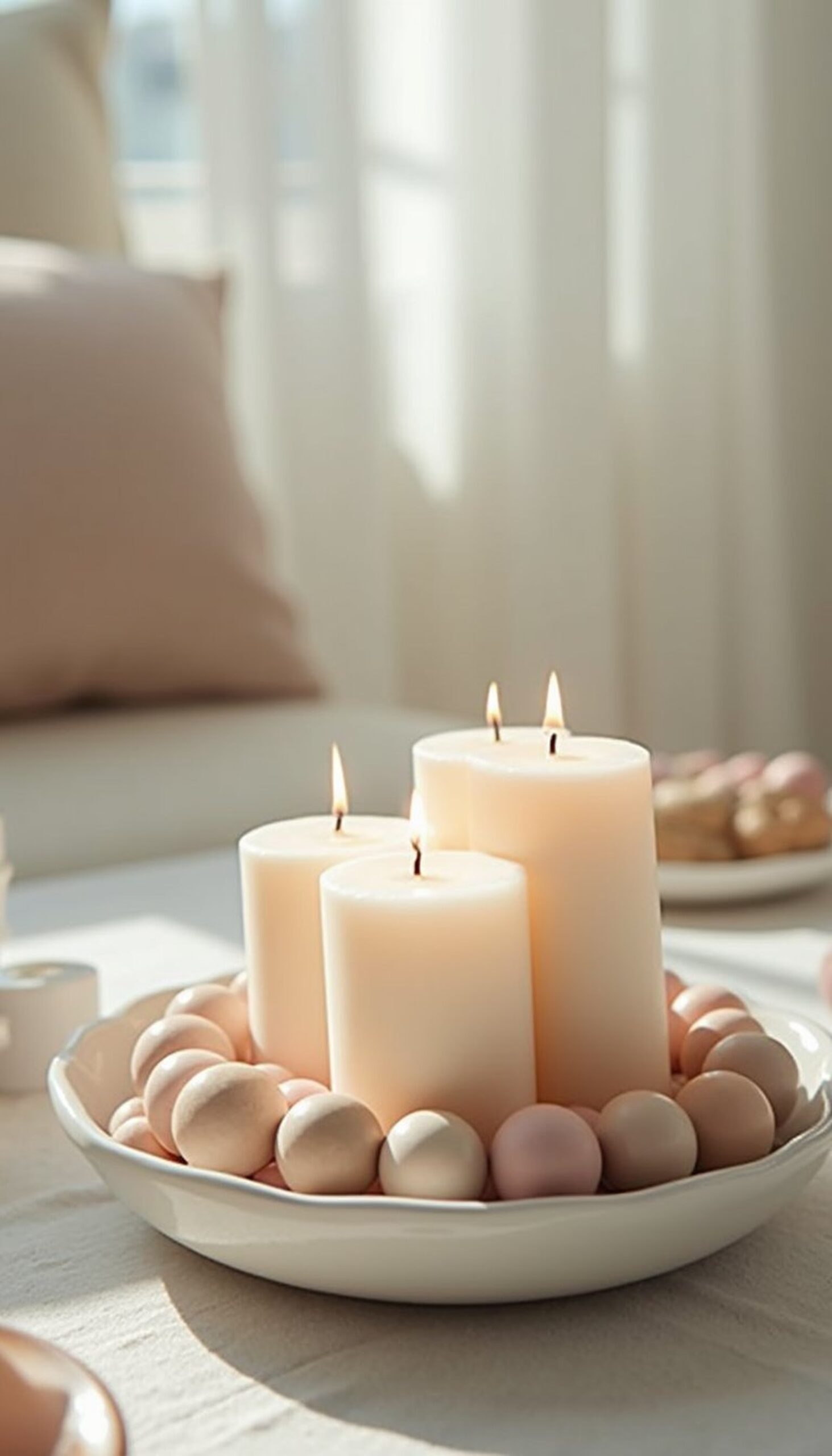
Arrange a trio of candles—tapers, pillars, or tea lights—on a shallow ceramic dish and scatter pastel wooden or ceramic beads around them like confetti. The beads add color and texture without overwhelming the candles’ warm glow. Choose a neutral base plate, then layer beads in shades of peach, mint, and sky blue for a soft palette. The mix of wick flame, smooth beads, and matte ceramics reads cozy and festive on the table. I often place a small mirror under the tray for extra shimmer when light hits it.
Styling Tips
- Keep beads away from open flames; use candle collars if needed.
- Vary candle heights for rhythm.
- Add a few sprigs of rosemary for scent and greenery.
Minimalist monochrome eggs in a bowl
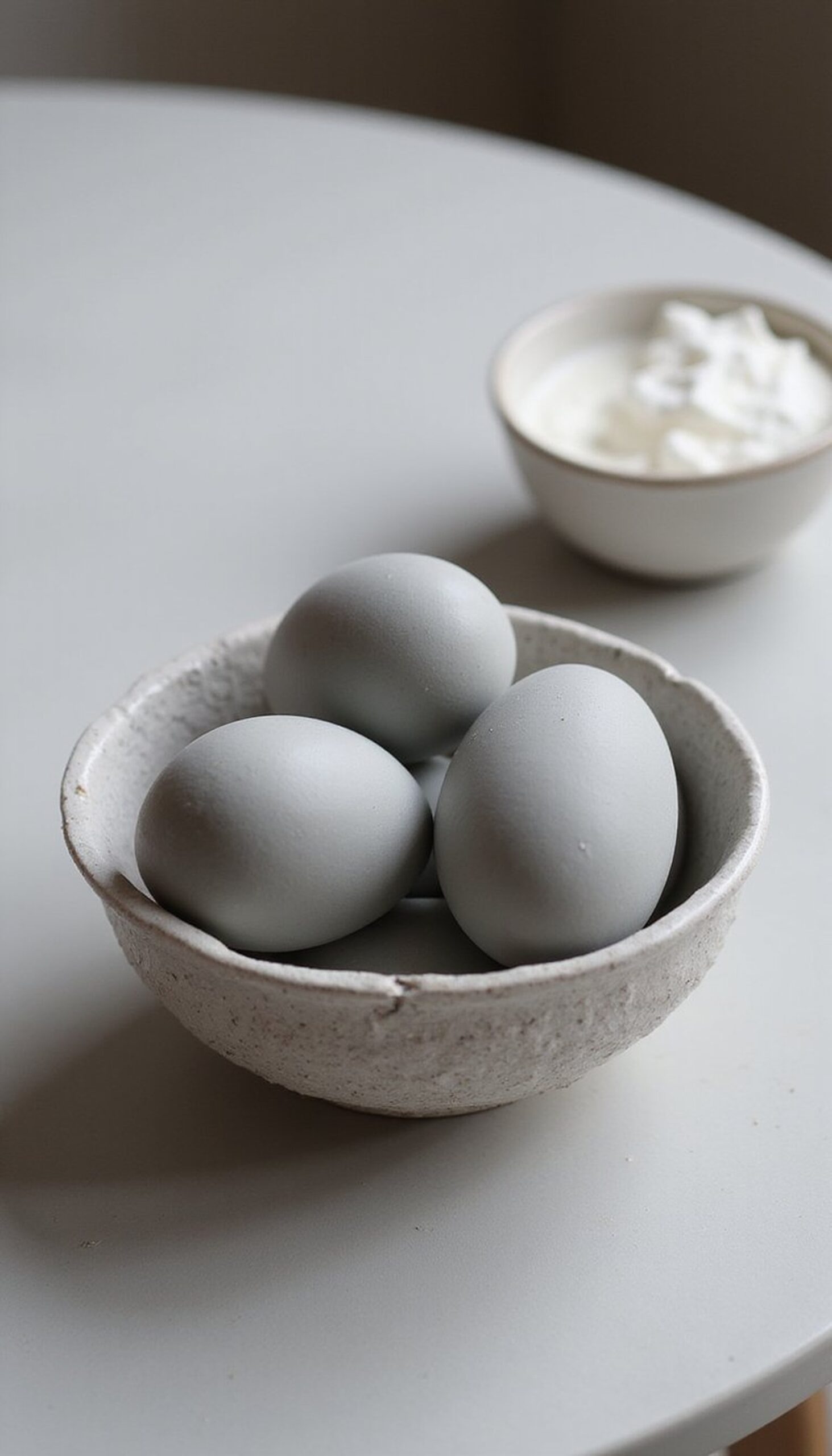
For a quieter table, choose eggs in one tonality—white, dove gray, or matte black—and nestle them in a textured ceramic bowl or concrete vessel. The simplicity of one color palette draws attention to shape and shadow, and the matte finishes add a contemporary edge. Pair with a simple linen runner and a single low vase for a clean, calm composition. I appreciate how this reads modern without much fuss, especially on a polished wood or marble table where negative space matters.
Styling Tips
- Choose a bowl with tactile surface texture.
- Keep surrounding decor minimal to emphasize form.
- Mix a few natural elements like a twig or two.
Terracotta hyacinth pots for a cheery spread
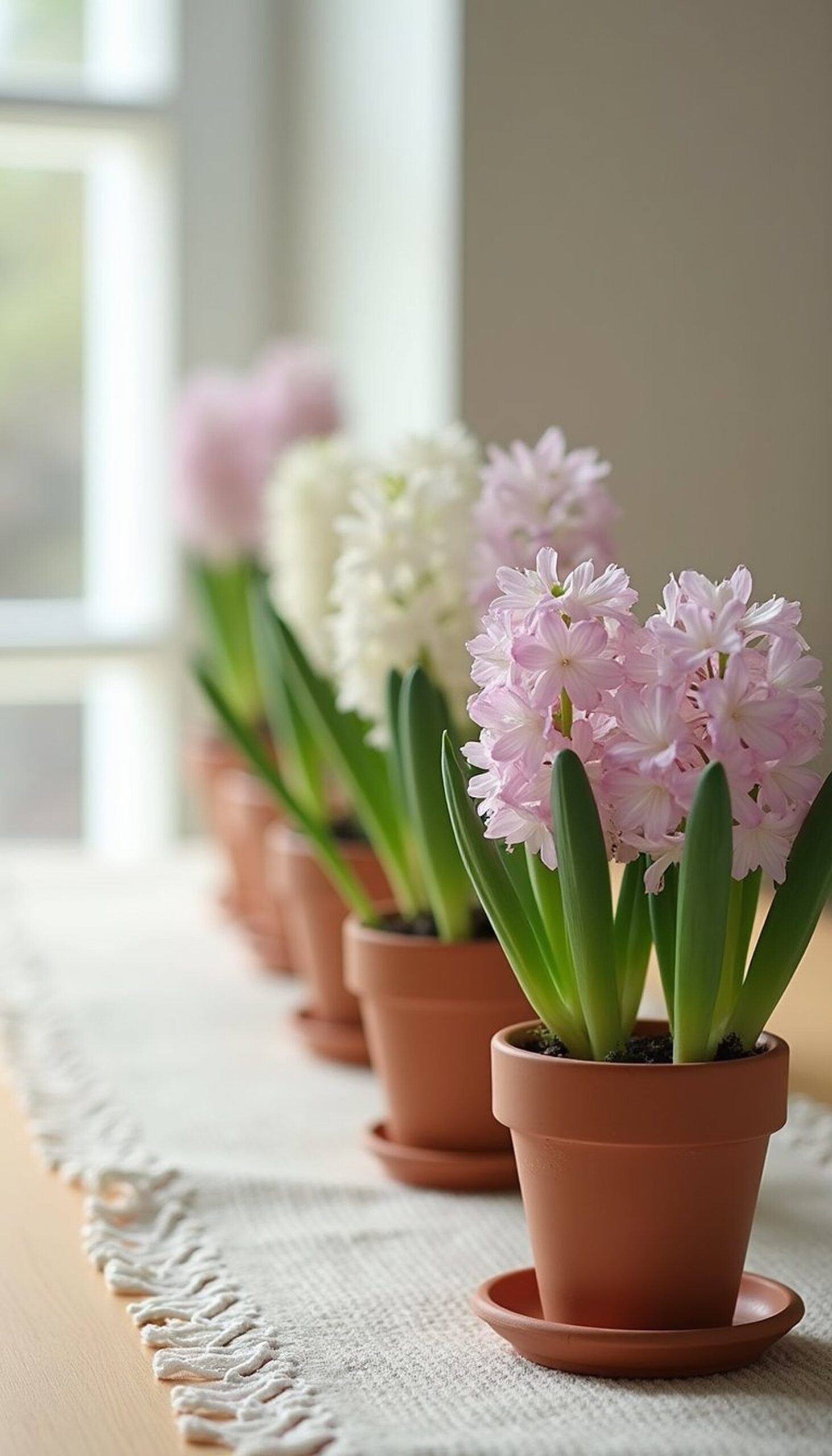
Plant hyacinths in small terracotta pots and arrange them down the center of the table on a strip of burlap or woven runner. The grainy clay and dense flower clusters create an old-fashioned, homey feeling. Choose hyacinths in blush, lavender, and white for a classic spring mix; the fragrance is an added layer that lifts the meal. Terracotta warms up cooler tabletops, and the pots can be reused in the garden later. I often tie a jute bow around each pot for a finishing touch.
Styling Tips
- Place pots on saucers to protect the table from water.
- Stagger pot heights using small risers or stacks of coasters.
- Add small name tags to each pot for seating assignments.
Foraged twig wreath with tiny hanging eggs
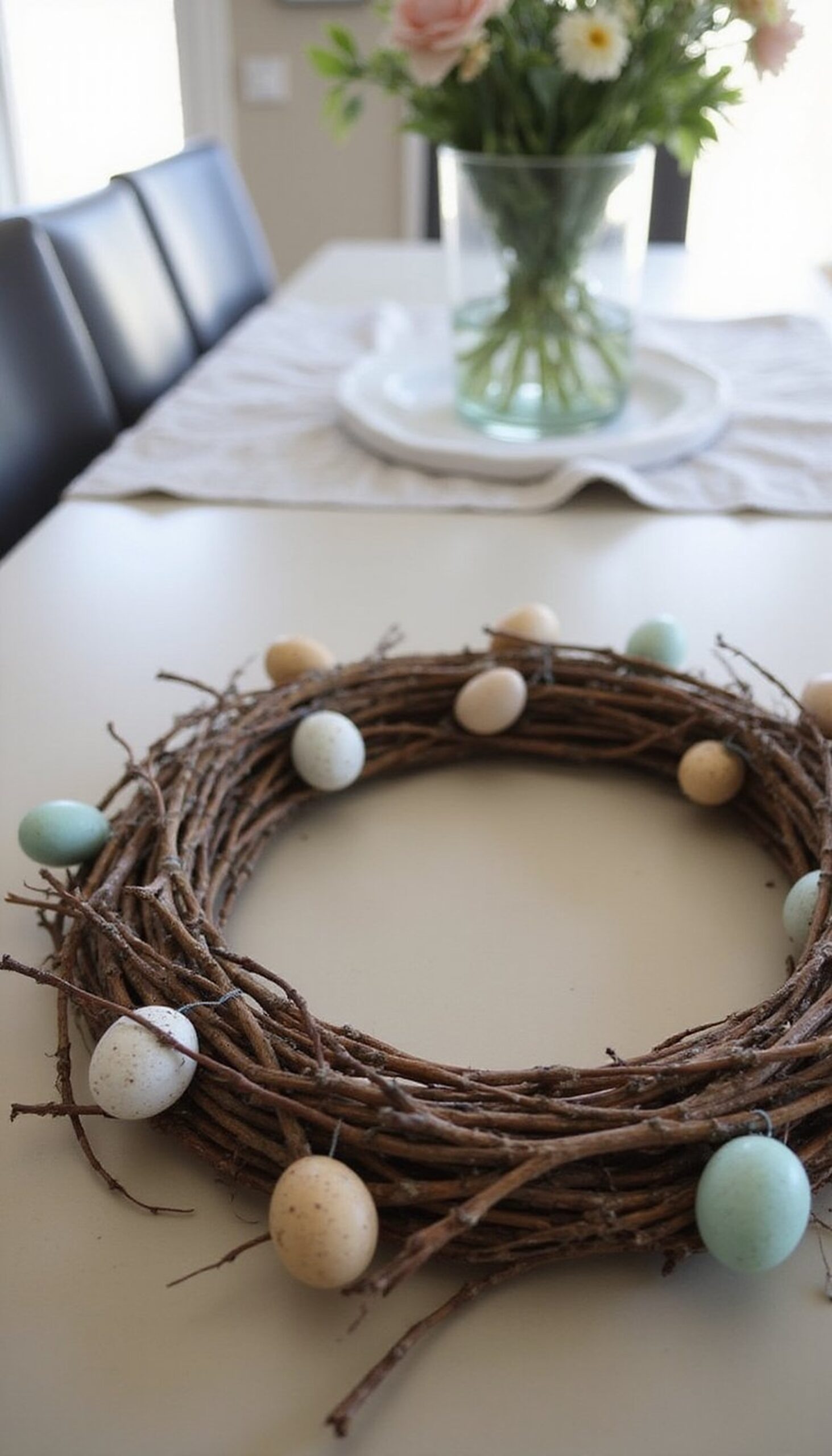
Create a low wreath from braided twigs and lay it flat as a centerpiece base, then hang miniature painted eggs from the inner rim with thin ribbon to create gentle movement. The twig texture gives an earthy frame, while the dangling eggs add playfulness and color. Place a cluster of candles or a low floral arrangement in the wreath center to anchor it. I like foraging willow or grapevine for a flexible material that bends easily. Color combinations in soft peach, sage, and cream feel springlike.
Styling Tips
- Secure dangling eggs with small knots to prevent sliding.
- Use battery candles if open flame is a concern.
- Keep the wreath low so guests can converse across the table.
Linen runner layered with dried flower bundles
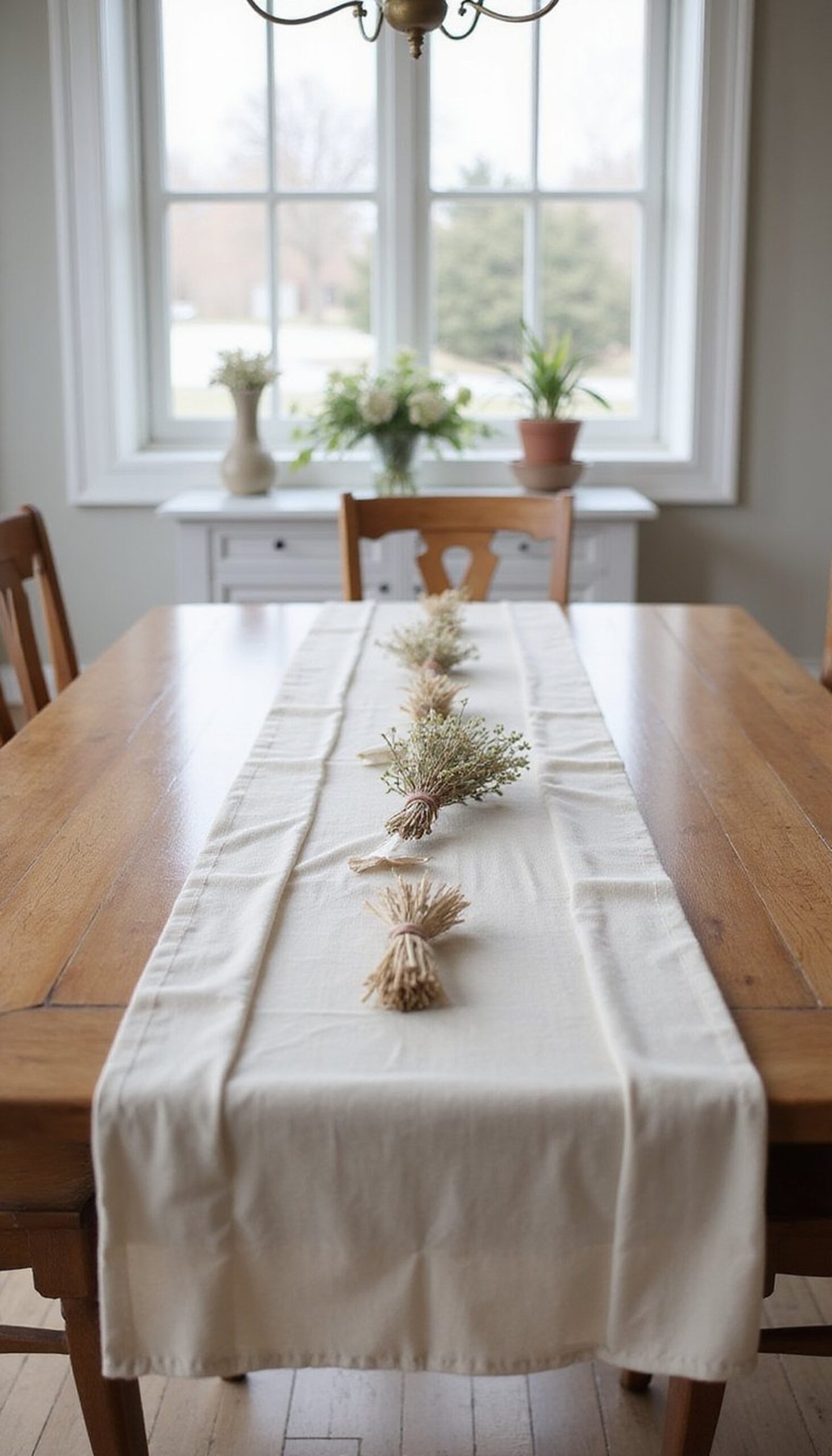
Layer several narrow linen runners lengthwise and tuck small bundles of dried flowers—statice, bunny tails, lavender—along the center, tied with twine. The dried textures and neutral linen create a calm, textural centerpiece that lasts beyond the meal. Color tones skew soft beige, dusty rose, and faded lavender for a gentle palette that complements wood and ceramic tableware. I like how this approach feels low-maintenance and still thoughtfully arranged; dried blooms stay graceful even in warm rooms.
Styling Tips
- Wrap bundle stems tightly so they don’t shed.
- Mix bundle sizes to avoid uniformity.
- Place small candles between bundles for evening ambiance.
Vintage book stacks topped with bud vases
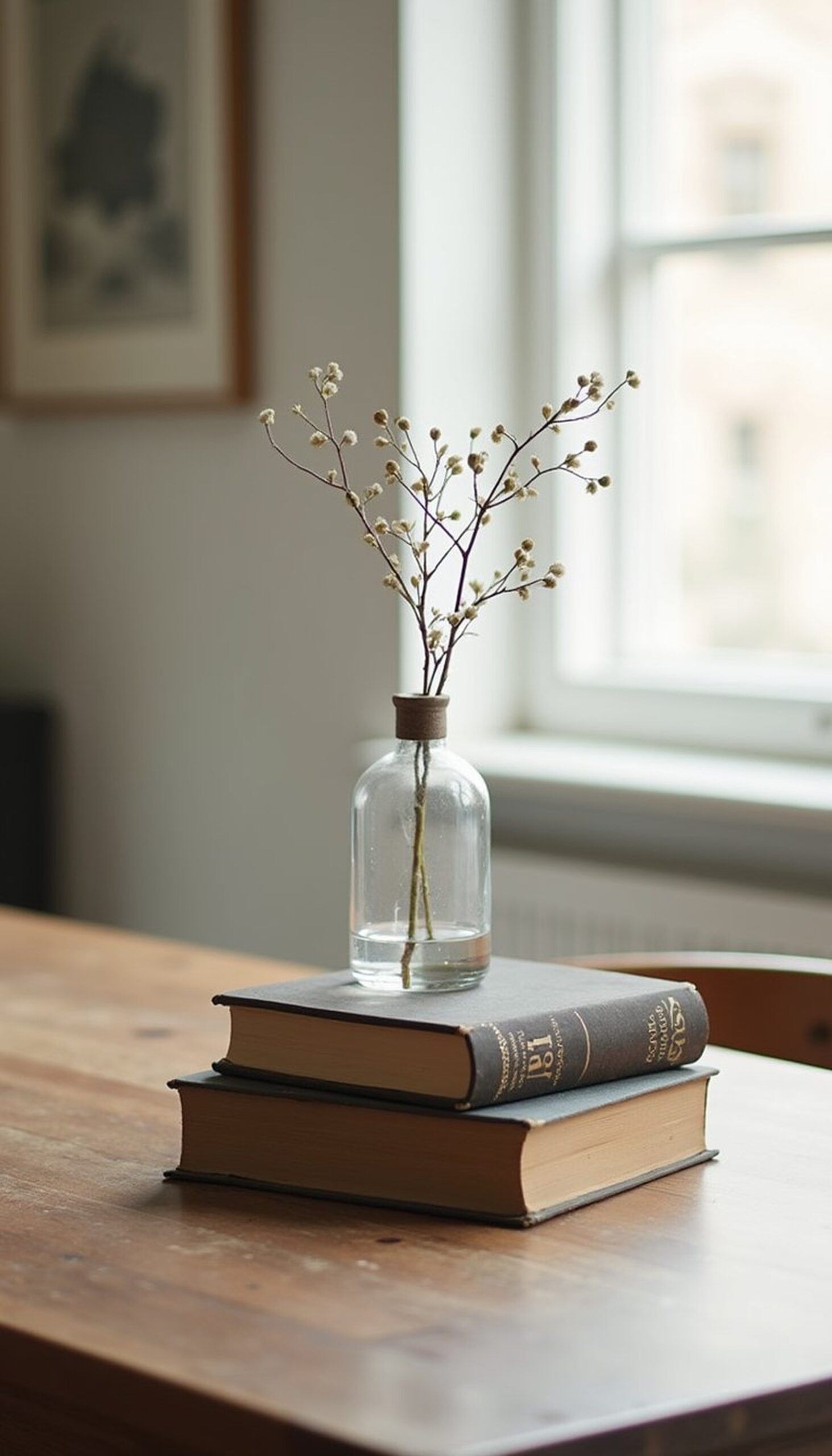
Stack a few small vintage books in the center of the table and balance a tiny bud vase or milk glass on top with a single stem or two. The paper edges, printed covers, and fragile blooms create a vignette that feels story-driven and personal. Palette choices include ivory, soft blue, and muted green to keep the visual calm. This is a great way to add height without tall floral arrangements. I love borrowing a favorite cookbook for the stack to nod to the meal you’ll share.
Styling Tips
- Protect books with a thin waxed paper layer if placing wet vases.
- Vary book sizes for a stepped profile.
- Add a small decorative object for a finishing touch.
Woven basket filled with eggs and greens
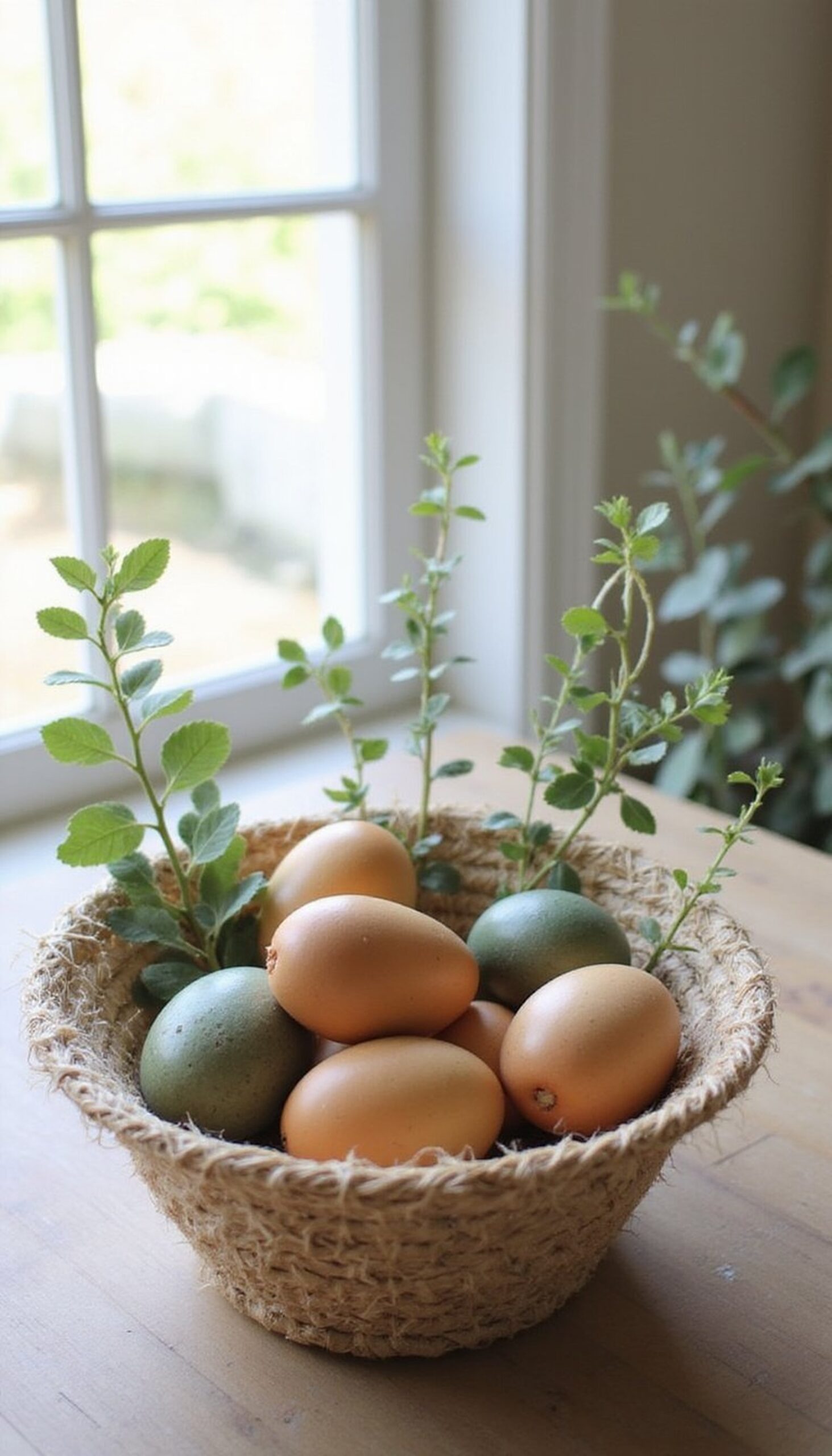
Fill a shallow woven basket with a nest of raffia, a mix of dyed and natural eggs, and loose sprigs of eucalyptus or fern fronds. The basket’s warm weave and airy greens create a relaxed centerpiece that’s easy to move if needed. Stick to an organic palette—olive green, cream, and sand—with one accent pastel to keep things fresh. I often place the basket slightly off-center on a round table to encourage a casual, lived-in look that invites guests to reach and chat.
Styling Tips
- Line the basket with a cloth napkin for extra padding.
- Mix real and faux eggs for durability.
- Add a few tiny fairy lights for nighttime dinners.
Simple herb garden jars as a centerpiece
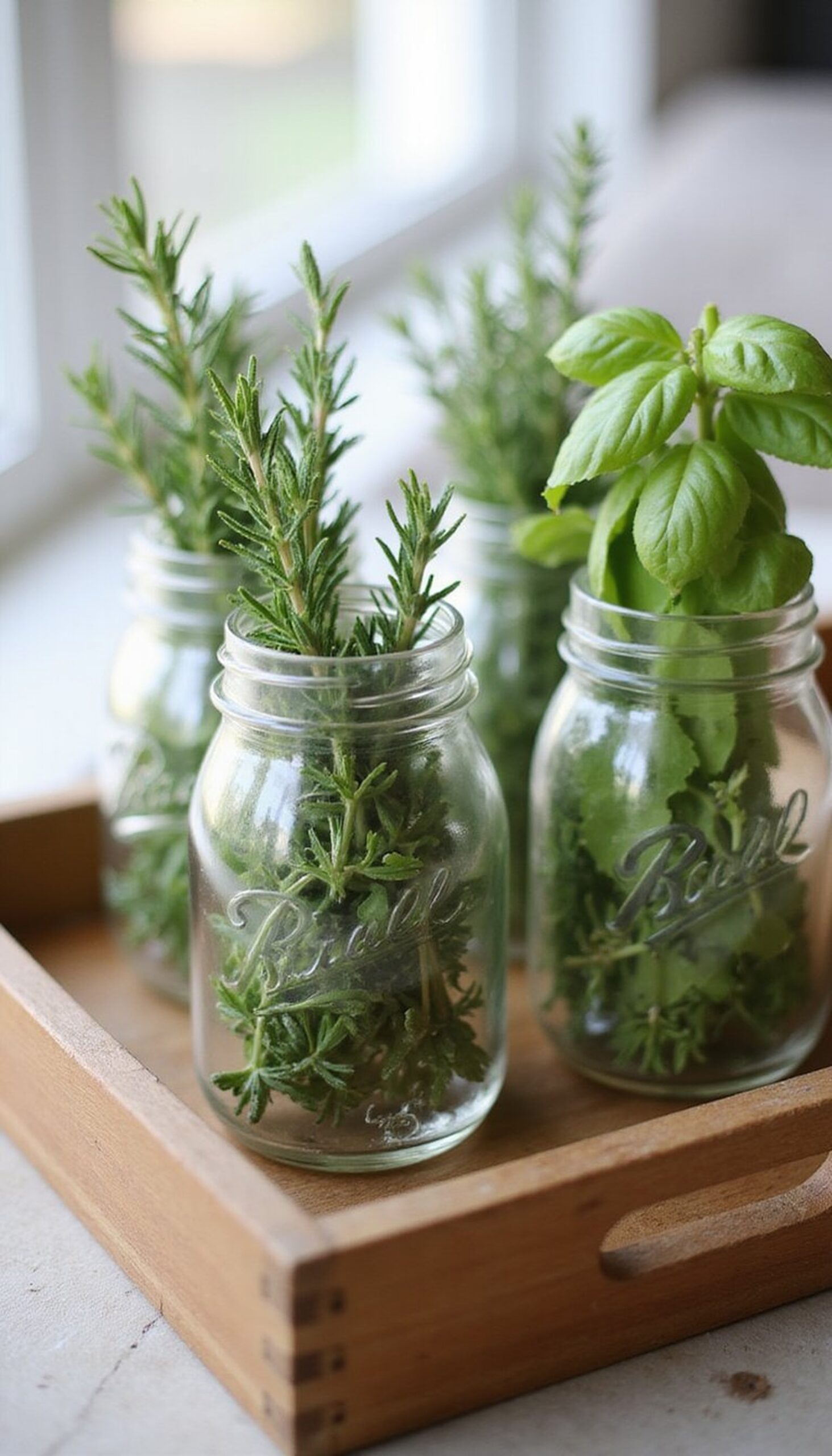
Group mason jars or simple glass bottles with sprigs of rosemary, basil, and thyme as a fragrant and edible centerpiece. Tie twine around each jar and set them on a wooden board or tray to keep things tidy. The glossy leaves and structured herbs add green texture while remaining useful after the meal. A palette of deep green with white or clear glass feels fresh and understated. I keep scissors nearby so guests can snip a sprig for their plate if they like the aroma.
Styling Tips
- Label each jar so guests know the herbs.
- Fill jars with water and change out every other day.
- Pair with plain ceramic plates to let the greens stand out.
Macramé-wrapped bottles for boho table scenes
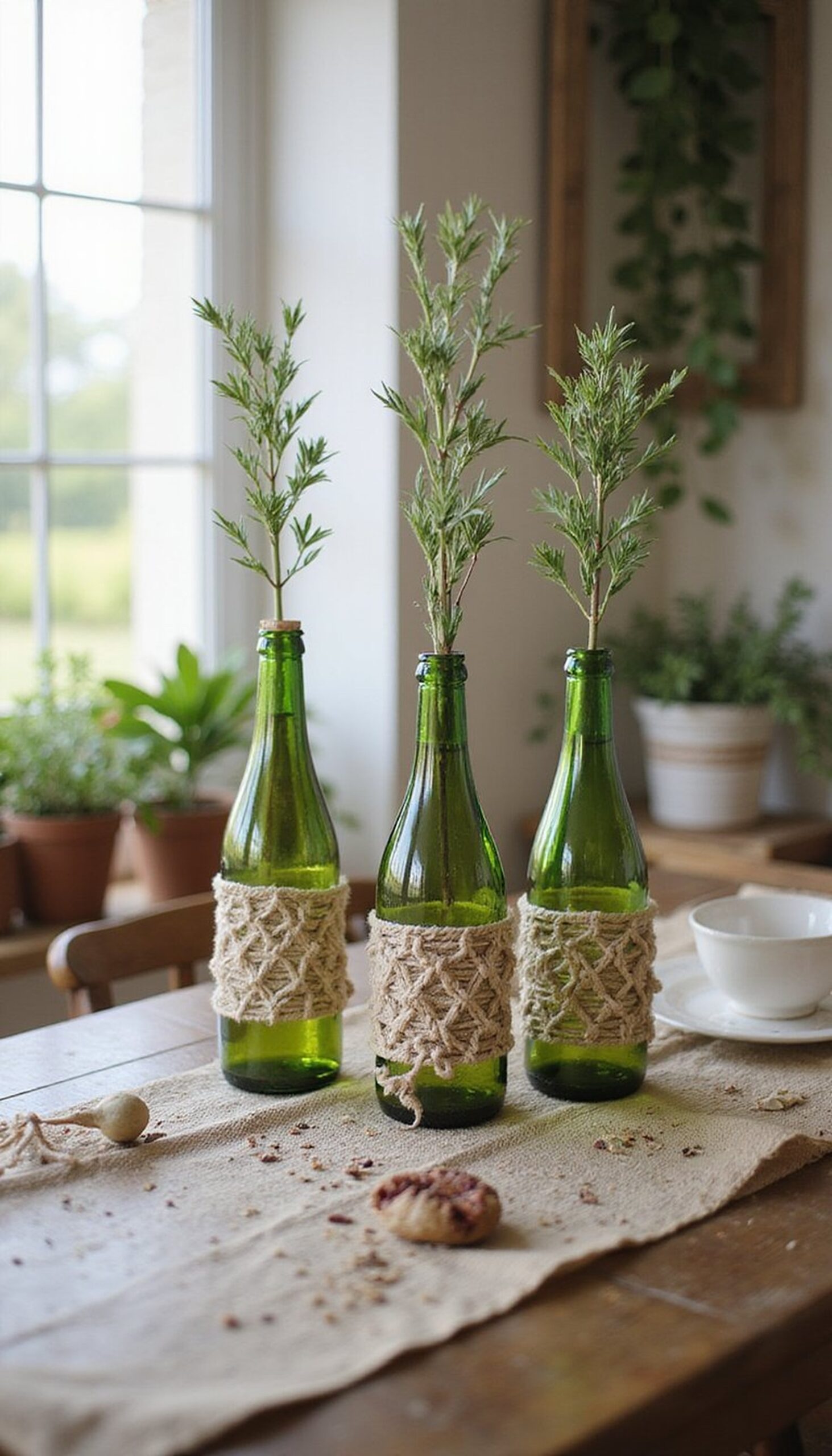
Wrap recycled glass bottles in simple macramé sleeves and place single stems—dandelion puff, tulip, or a long grass—inside. The knotted rope texture contrasts with the slick glass, creating a boho-leaning centerpiece that still reads lightweight. Use natural cotton cord and keep the color palette earthy: cream, sage, and muted terracotta. I like arranging three or five bottles in a loose cluster down a narrow table runner for a relaxed, handmade aesthetic that pairs well with ceramic plates.
Styling Tips
- Vary bottle heights to create a layered look.
- Use neutral runners to let the knots be the focus.
- Add a small wooden bead garland around the cluster for detail.
Ombre dyed egg tower on a cake stand
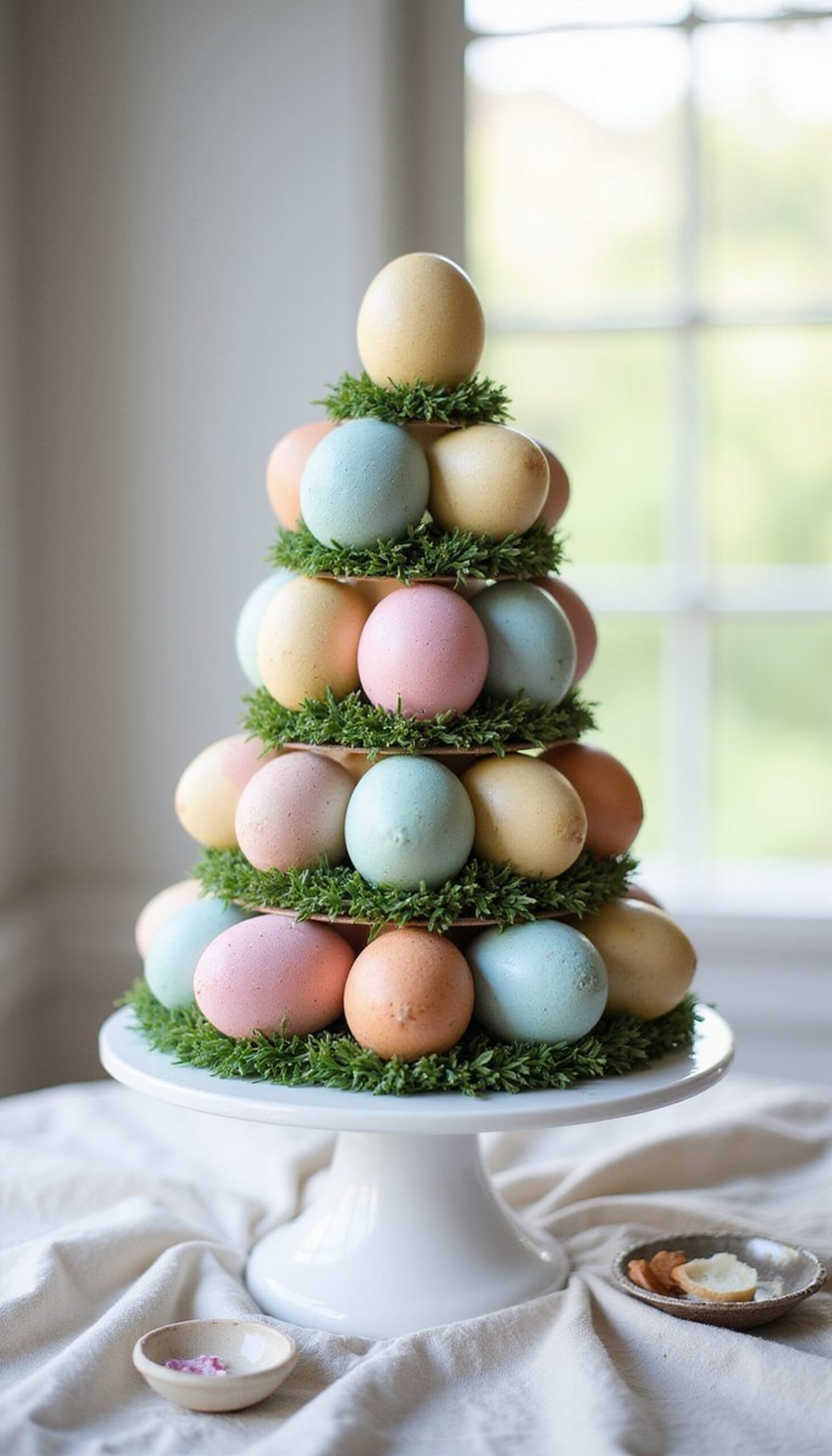
Create an ombre effect by dyeing a batch of eggs from light to deep shades and stacking them in a cone on a cake stand, alternating with thin greenery rings between tiers. The graduated color creates a focal point that feels playful but orderly. Use muted blues, pinks, or greens for a soft gradient that complements most tableware. I like placing the stand on a neutral placemat so the color shift reads clearly. Guests often admire the little color story before the meal begins.
Styling Tips
- Start with the lightest eggs at the top for a tapered look.
- Add small floral sprigs between layers for softness.
- Use a non-slip mat under the stand for stability.
Glass cloche with moss, bird’s nest, eggs
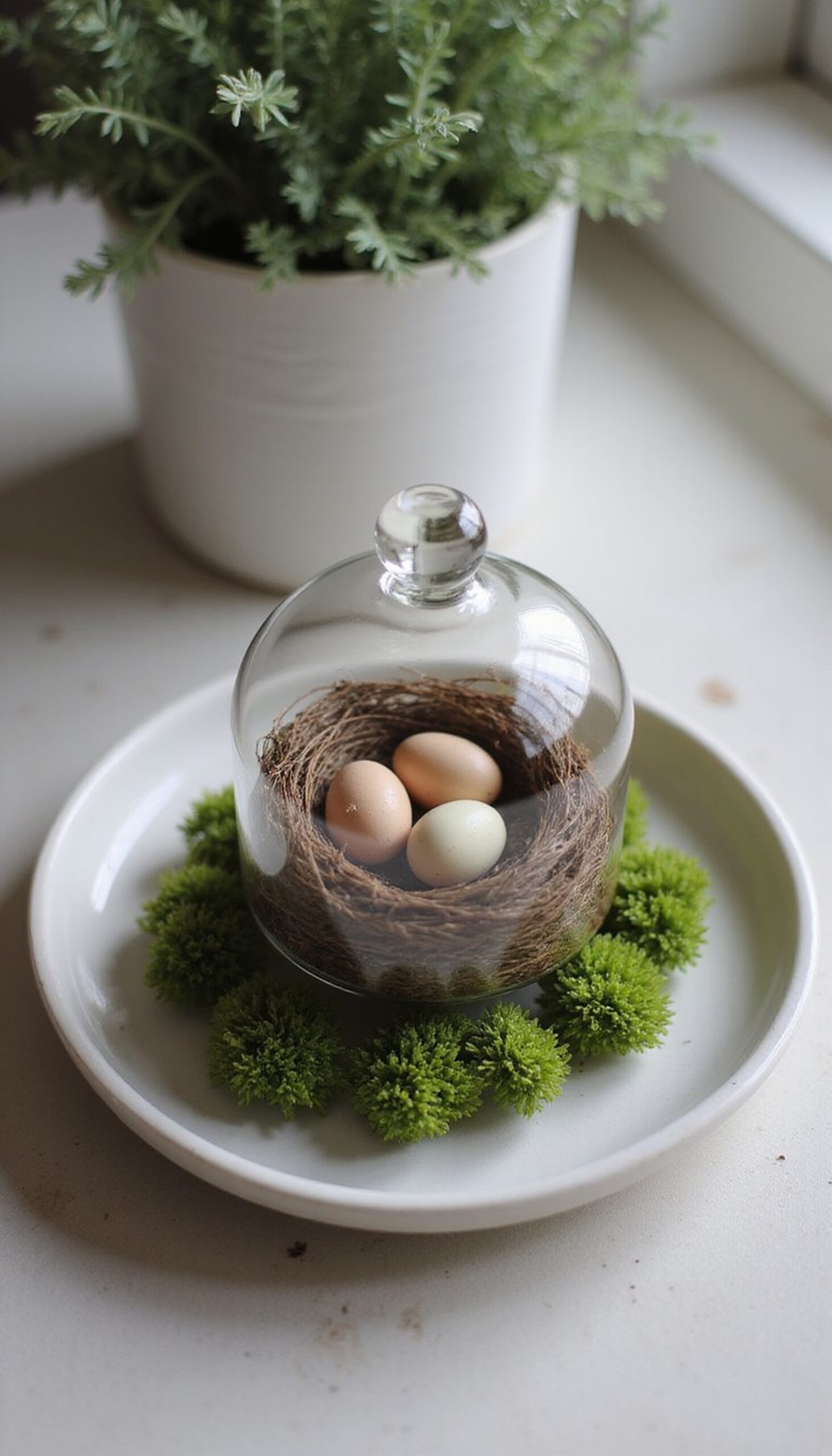
Place a miniature bird’s nest atop a bed of preserved moss on a small ceramic plate and cover with a glass cloche for an intimate vignette. The glossy dome highlights the textures underneath—soft moss, brittle nest twigs, and smooth eggshell. Choose eggs in cream or pale blue to keep the focus on texture rather than bright color. I enjoy lining several small cloche vignettes down a long table so each guest can lean in and take a closer look. The effect feels museum-like yet warm.
Styling Tips
- Use preserved moss to avoid damp issues.
- Pair a cloche with a matching base for cohesion.
- Place cloches at intervals to maintain sightlines across the table.
Polished pebble bowl with single stem accents
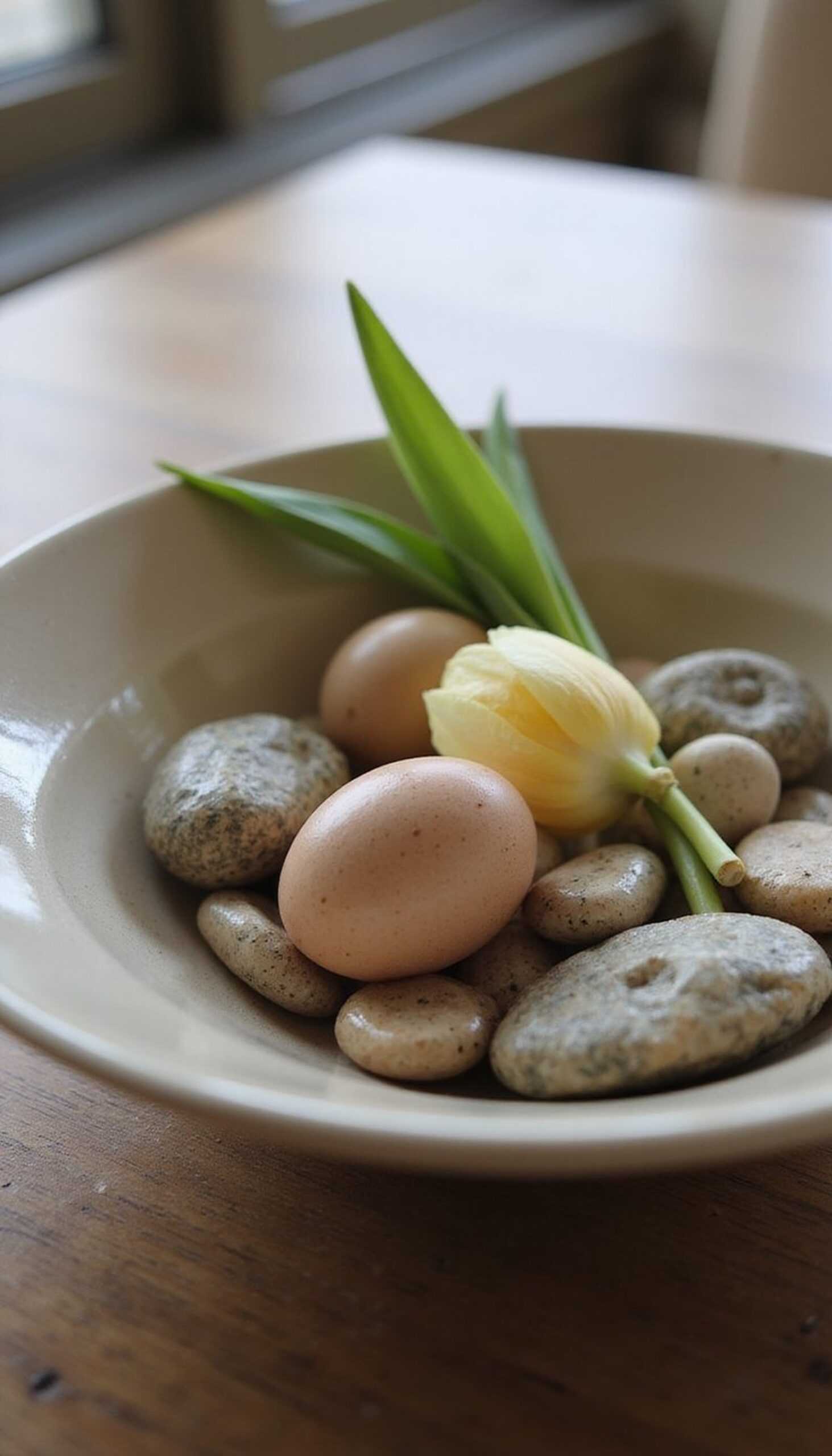
Fill a shallow bowl with smooth river pebbles and nest a few painted eggs among them, then add a single long stem—like a tulip or allium—laid across the bowl for sculptural interest. The pebbles give weight and texture, while the single stem adds a graphic line. A neutral pebble palette with one pop of spring color in the stem keeps the arrangement modern and composed. I find this works beautifully on contemporary dining tables where clutter is kept to a minimum.
Styling Tips
- Select pebbles in a consistent size for a calm surface.
- Lay the stem gently to avoid crushing blooms.
- Pair with matte dinnerware for a cohesive look.